
From “Throwing it over the wall” to “Building a bridge to the user”
I once launched a feature I was incredibly proud of. We had spent months building it. The engineering was flawless. The design was beautiful. On launch day, we turned on the feature flag, sent out a generic email to our entire user base, and waited for the usage graph to spike.
It flatlined.
I spent the next week frantically emailing customers, trying to figure out why no one cared. The answer was painful: we had built a solution for a specific problem (power user data export) but marketed it to everyone as a general improvement. The power users missed the email because it looked generic. The general users ignored it because it sounded technical.
We didn’t have a Go-to-Market (GTM) strategy. We just had a “release” plan.
There is a big difference. A release plan is about when the code goes live. A GTM strategy is about how the product reaches the customer.
The GTM Matrix
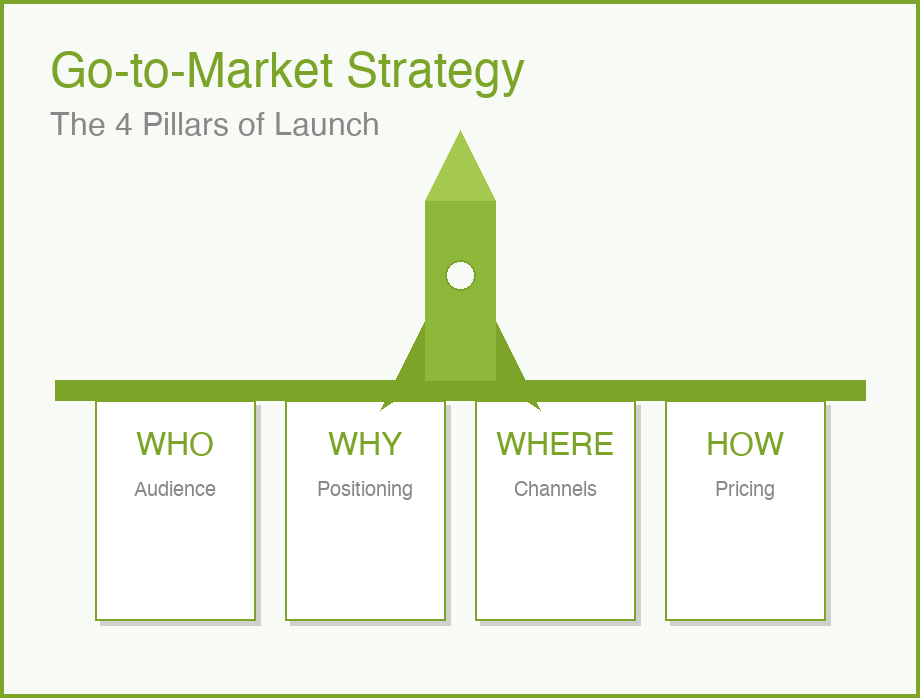
A good GTM strategy answers four specific questions. I call this the GTM Matrix. If you skip one, the launch will likely fail.
1. Who are we targeting? (Target Audience)
“Everyone” is not a target market. As I learned the hard way, if you try to speak to everyone, you speak to no one.
You need to define your Ideal Customer Profile (ICP). Are we targeting Enterprise CTOs? Freelance designers? Busy parents? The narrower your focus at launch, the easier it is to find them.
2. Why should they care? (Positioning)
This is where many PMs struggle. We tend to describe what the product does (“It uses ML to sort photos”) rather than why it matters (“Find your wedding photos in seconds”).
April Dunford is the authority on this. She argues that positioning isn’t just messaging; it’s defining the context for your product. If I sell you a “cake,” you expect dessert. If I sell you “nutritional energy bars,” you expect a snack. If my cake is actually a high-protein energy block, calling it a “cake” sets the wrong expectations.
3. Where will they find it? (Channels)
How do your target customers buy things?
- Inbound: Do they search Google for solutions? (Content marketing, SEO).
- Outbound: Do they need a sales rep to explain the value? (Direct sales).
- Viral: Do they invite friends? (Product-led growth).
Don’t pick a channel just because it’s popular. Pick the one where your users already hang out.
4. How much will it cost? (Pricing & Packaging)
Is this a free feature for existing users? An upsell? A standalone product? Pricing isn’t just a number; it’s a signal of value. If you price a “Enterprise Security Suite” at $10/month, enterprises won’t trust it.
Soft Launch vs. Hard Launch
One of the biggest strategic decisions is how you roll it out.
The Soft Launch (The “Beta”)
A soft launch is when you release the product to a limited audience with little to no fanfare.
- Goal: Learning and risk mitigation.
- Best for: Risky new products, major workflow changes, or when you aren’t sure about the positioning.
- Method: Invite-only access, releasing to 5% of users, or launching in a single geographic market (like New Zealand or Canada).
The Hard Launch (The “Big Bang”)
This is the press release, the Product Hunt post, the email blast to everyone.
- Goal: Maximum attention and growth.
- Best for: Proven features, highly anticipated updates, or when network effects are critical.
- Risk: If it breaks, everyone sees it.
I almost always prefer a soft launch followed by a hard launch. Use the soft launch to fix the bugs and refine the message. Then, when you know it works, make the noise.
The Launch Checklist
When you are ready to go, you need a tactical checklist. Here is the one I use to make sure I haven’t forgotten anything:
- Internal Training: Does Support know how to answer questions? Does Sales know how to sell it?
- Documentation: Are the help center articles written?
- Metrics: Are the analytics tracking events firing? Do we have a dashboard ready?
- Assets: Are the screenshots, videos, and blog posts approved?
- Rollback Plan: If the server melts, can we turn it off instantly?
How to Use With AI
A Go-to-Market strategy often fails because of “blank page paralysis.” We know we need a plan, but starting from scratch is hard. This is where Generative AI shines—not as the strategist, but as the GTM Facilitator.
1. The “Persona Stress Test”
Instead of guessing how your messaging sounds, ask AI to roleplay your target customer.
- Prompt: “Act as a busy Enterprise CTO who is skeptical of new tools. I am going to pitch you my new feature [Insert Description]. Tell me why you would ignore this email. Be harsh.”
- Goal: Find the weak spots in your “Why” before you launch.
2. The Channel Brainstorm
We often stick to the channels we know (Email, LinkedIn). Use AI to find the ones you missed.
- Prompt: “My target audience is [Insert Audience, e.g., freelance graphic designers]. Beyond the obvious social media platforms, where do these people hang out online? List specific communities, newsletters, or influencers.”
3. The “Asset Generator”
Writing 50 variations of a social media post is tedious.
- Prompt: “Here is my core value proposition: [Insert Value Prop]. Generate 5 LinkedIn posts, 5 Tweets, and 1 short email announcement. Vary the tone: make one excitement-driven, one problem-focused, and one data-driven.”
The Guardrail: AI can generate the content, but you must define the context. Never let AI decide your pricing or your core positioning. That requires human judgment about your market and business goals.
Conclusion
A Go-to-Market strategy is not something you write the week before launch. It should be part of the product development process from the very beginning.
When you write the user story, ask “Who is this for?” (Audience). When you design the prototype, ask “How will they find this?” (Channel).
If you build the GTM strategy with the product, you won’t be left staring at a flat line on launch day.
What do you think? Comments are gladly welcome.